
"Zimbabwe farms"
200 article(s) found

Introduction of major coffee producing areas in the world
Coffee comes from coffee beans, which are harvested and processed from the fruit of trees. Coffee trees grow at the center of the equator, between latitudes of 25 degrees south and north, and are called the homes of tropical or subtropical countries called coffee belts. At present, there are about 60 coffee-producing countries. Coffee is produced in South America, Central America, the West Indies, Asia, Africa, Arabia, the South Pacific and

The main coffee producing areas in the world introduce the types of fine coffee beans.
Coffee comes from coffee beans, which are harvested and processed from the fruit of trees. Coffee trees grow at the center of the equator, between latitudes of 25 degrees south and north, and are called the homes of tropical or subtropical countries called coffee belts. At present, there are about 60 coffee-producing countries. Coffee is produced in South America, Central America, the West Indies, Asia, Africa, Arabia, the South Pacific and
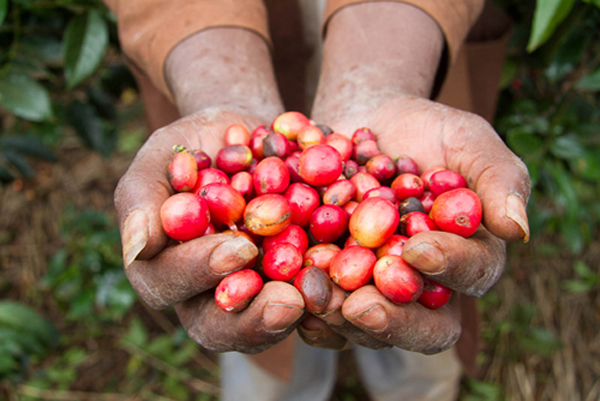
The most detailed introduction to coffee beans in the world. Coffee beginners must see the knowledge points
Coffee comes from coffee beans, which in turn are harvested and processed from the fruits of trees. Coffee trees grow at the equator as the center, between 25 degrees north and south latitude, known as the coffee belt tropical or subtropical countries home, coffee production countries currently have about more than 60 countries, coffee production in South America, Central America, West Indies, Asia, Africa, Arabia, South Pacific and

Rwanda Red bourbon _ three different Red bourbon Coffee characteristics
Rwanda Rwanda from Central Africa, Uganda to the north, Tanzania to the east, Burundi to the south and Congo to the west, is a standard landlocked country. The neighboring countries are all big coffee producers. For many years, Rwanda coffee beans have been exported through the ports of Uganda to Kenya. Rwanda Rwanda beans are characterized by smoothness, acidity and floral fragrance similar to those of Yegashev and Kenya AA.
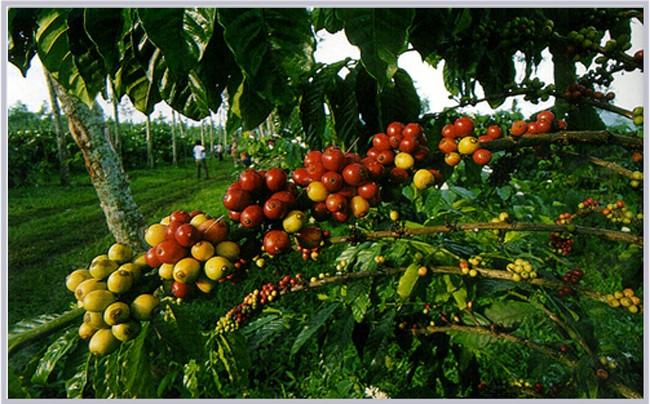
Coffee Estate Knowledge Points: Collection and classification of world boutique coffee estates in detail
Coffee comes from coffee beans, which are harvested and processed from the fruits of trees. Coffee trees grow at the equator as the center, between 25 degrees north and south latitude, known as the coffee belt in tropical or subtropical countries home, coffee beans are currently. Coffee comes from coffee beans, which in turn are harvested and processed from the fruits of trees. Coffee trees grow at the equator.

Introduction to the characteristics of Tanzania Fine Coffee Bean Flavor Manor with excellent Taste
Tanzania is rich in mineral resources. By 2014, the major minerals identified include gold, diamond, iron, nickel, phosphate, coal and various gemstones, ranking fifth in Africa in total. Tanzania also has huge natural gas reserves. According to official data released by Tanzania, Tanzania has proven natural gas reserves of 44 trillion cubic feet, and the total reserves are expected to be at least
Picking coffee beans planting coffee beans in imported coffee producing areas
Most Arabica coffee beans mature from June to August and Roberts coffee beans from September to October. Therefore, although in some countries where the dry and wet seasons are not obvious, such as Colombia and Kenya, there are two flowering periods a year, that is, two harvests, strictly speaking, only once a year. Of course, the harvest time varies from region to region. South of the equator, such as Brazil

Description of flavor and aroma of Rwanda A PLUS washed red bourbon coffee
Exchange of professional baristas please pay attention to the coffee workshop (Wechat official account cafe_style) from Rwanda Rwanda in Central Africa, Uganda to the north, Tanzania to the east, Burundi to the south and Congo to the west, it is a standard landlocked country, neighboring countries are all big coffee-producing countries. For many years, Rwanda coffee beans have been exported and shipped through the ports from Uganda to Kenya. Rwa
The picking of coffee beans coffee beans are the seeds of coffee trees.
Coffee beans are the seeds of coffee trees. After 3-4 years of growth, the coffee tree matures and begins to bear fruit in clusters or clusters along the branches. The outside of the seed is a layer of peel, which can be picked as soon as it turns red. Under the red skin (exocarp) there is a layer of pulp (mesocarp), which is a small thin layer, and then a layer of material endocarp like parchment. In all

2008 COE Champion | Kigali District of Rwanda | Abakundakawa Ambarkanda Cooperative | Bourbon
For more information on coffee beans, please follow the coffee workshop (official Wechat account cafe_style) 2008 COE Champion | Kigali District of Rwanda | Abakundakawa Ambarkanda Cooperative | Bourbon flavor? Rwanda (Rwanda) from Central Africa, bordered to the north (Uganda), east (Tanzania), south (Burundi), west

Introduction of NCLL coffee beans in Zambia _ Mapang coffee beans in Kassama region, Zambia
Professional coffee knowledge exchange more coffee bean information Please follow Coffee Workshop (Wechat official account cafe_style) among the countries in the world that produce Arabica coffee beans, Zambia in Central Africa plays only a very small role, with an annual export volume of about 6000 tons, with a total profit of about US $85 million. But this country is working hard in the hope that

What is the annual yield of a coffee tree?
Arabica produces a rich oil that smells good and has a light, dark yellow oil that floats on the surface. Robusta produces more grease, but has a lot of foam and disappears quickly. Robusta contains twice as much caffeine as Arabica. Caffeine content: 2.2-2.4% and 1.1-1

Characteristics of Papua New Guinea Coffee beans introduction to Papuan Paradise Bird Coffee Bean Grade
The island of New Guinea was colonized by the Netherlands, Germany, Britain, Japan, Australia and other countries from the 18th century to the 19th century. In 1961, the western half of the island became an Indonesian dependency, while the eastern half became independent from Australia in 1975, becoming the present-day PAPUANEWGU of Papua New Guinea.

Coffee 36 what's the taste of coriander in the bottle?
What is the taste of coriander in the coffee 36 smell bottle? 1 Land: land, flavor type (Aroma group) land, aroma characteristics (Aromatic features of the sample) this is the smell of freshly excavated soil after heavy rain, like beetroot. The earth is everywhere. The English geosmine of Geqi comes from the Greek geo=, taste = osme. The power of the earth, even if
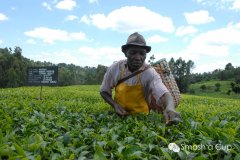
This article will take you into the world of coffee, a complete introduction to fine coffee.
Most Arabica coffee beans mature from June to August and Robart coffee beans from September to October. Therefore, although in some countries where the dry and wet seasons are not obvious, such as Colombia and Kenya, there are two flowering periods a year, that is, two harvests, strictly speaking, only once a year. Due to different regions, the harvest time is also different. North of the equator (eg Ethiopia

Introduction to the description and treatment of aromatic Burundian Coffee Flavor
There are two major ethnic groups in Burundi, and only about 15% of the Tutsi have ruled the country since the 16th century, controlling the civilian population, which is mainly made up of Hutu, plus a very rare aboriginal Twa. This abnormal social structure in which ethnic minorities occupy a high position has buried the evil of the instability of the country.

A brief introduction to the flavor and aroma characteristics of Tanzania Kilimanjaro coffee with excellent taste
There are 26 districts (Region) and 169counties (District) in Tanzania, among which coffee is one of the main cash crops in mainland 21 and Zanzibar 5, ranking fourth in Tanzania after cotton, tobacco and cashew nuts, mainly sold to Italy, Japan and the United States. Coffee exports play an important role in Tanzania's national economy. Tan
Reference index of coffee bean grading
(1) the size of coffee beans it is said that the size of beans does not affect the flavor of coffee, such as Mattari in Yemen. Although the particles of beans are large and small, they are still the top grade of coffee. However, in many producing areas, the size of coffee beans is indeed a valuable indicator. The regions where this classification method is generally used are Kenya, New Guinea and Poland.

The picking of coffee beans coffee beans are the seeds of coffee trees.
Coffee beans are the seeds of coffee trees. After three or four years of growth, the coffee tree matures and begins to bear fruit, with one fruit arranged in clusters or clusters along the branches. The outside of the seed is a layer of peel, which can be picked as soon as it turns red. Under the red skin (exocarp) there is a layer of pulp (mesocarp), which is a small thin layer, and then a layer of material endocarp like parchment. In

How to select high quality coffee beans
In fact, at present, there is no unified classification in the coffee industry, and each country of production is divided into different levels. For example, Brazil sets NO.2 as the highest level and Jamaica sets NO.1 as the highest level.